

Challenges of Traditional Methods
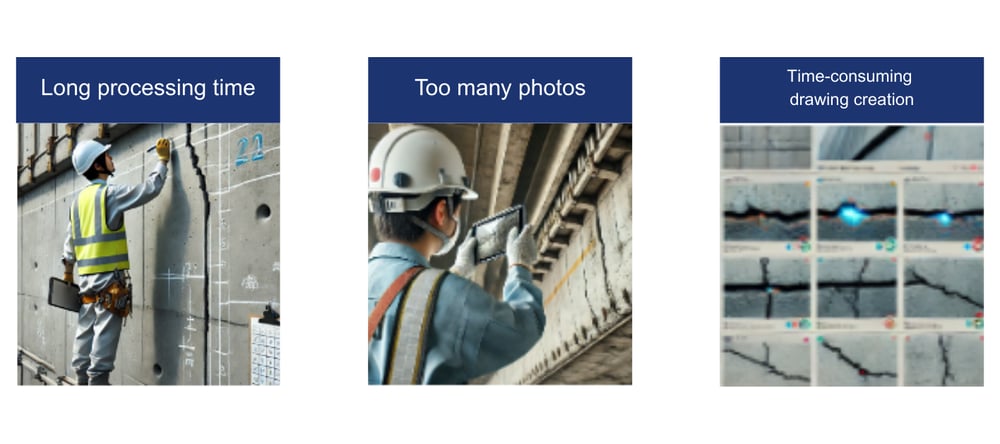
Benefit 1: Support Single-Person Operation While Reducing On-Site Measurement and Documentation Workload

-
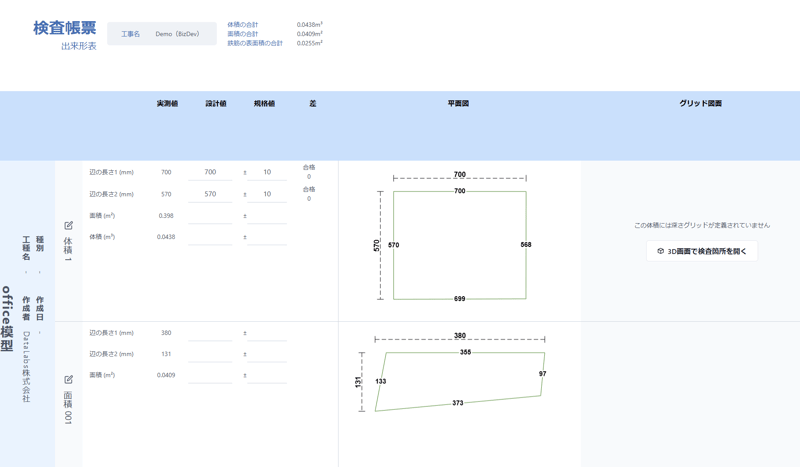
Markly enables automatic generation of quantity calculation sheets and CAD data.
-
By using 3D data instead of images, Markly streamlines labor-intensive tasks found in conventional methods, such as manual measurements and extensive photo documentation.
Benefit 2: Streamline Repair Drawing Creation and Facilitate Online Sharing & Discussions with Infrastructure Owners

- The infrastructure owner invitation feature enables remote review and delivery.
Benefit 3: Enable Division of Work and Allow Focus on Inspection and Survey Tasks
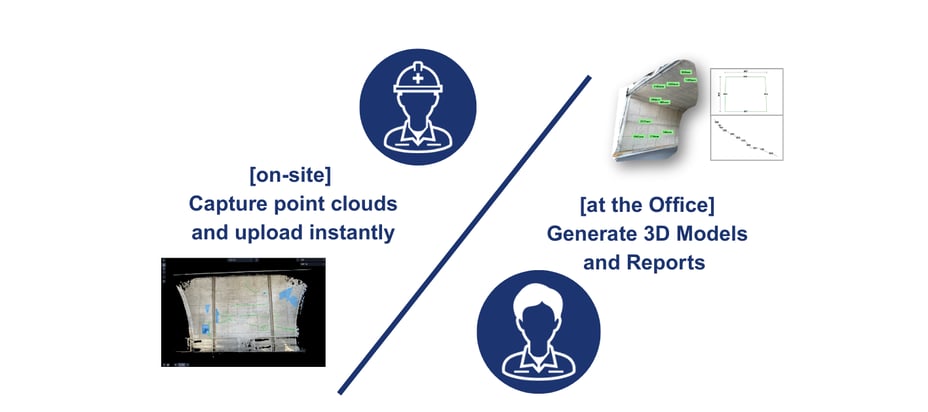
- By separating point cloud capture from automated drawing creation and quantity calculation, on-site staff can focus on inspection and survey operations.
Crack Length and Repair Area Calculation
-
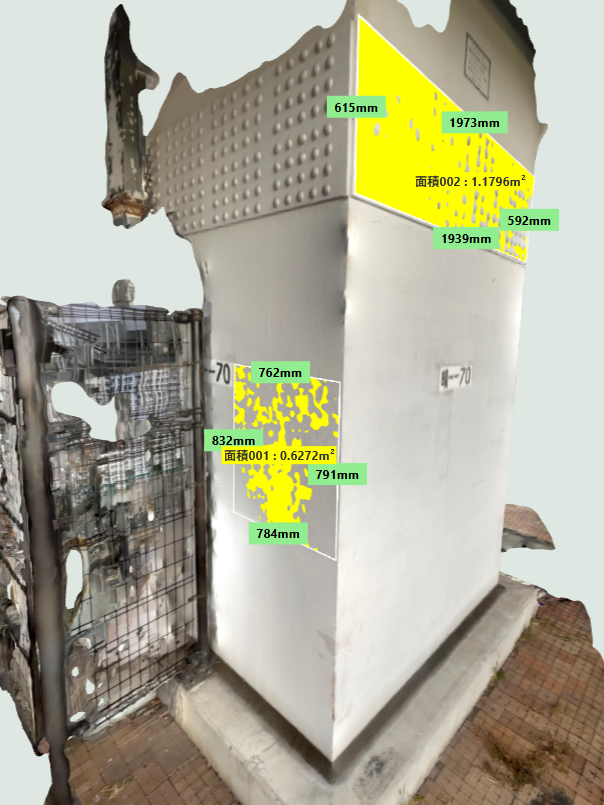
Markly enables the calculation of required quantities for construction quality control in spalling-prevention works. This includes measuring the area of damaged sections—such as exposed rebar, delamination, or paint peeling—and calculating crack lengths.
-
The calculated areas and crack lengths can be exported as formal reports.
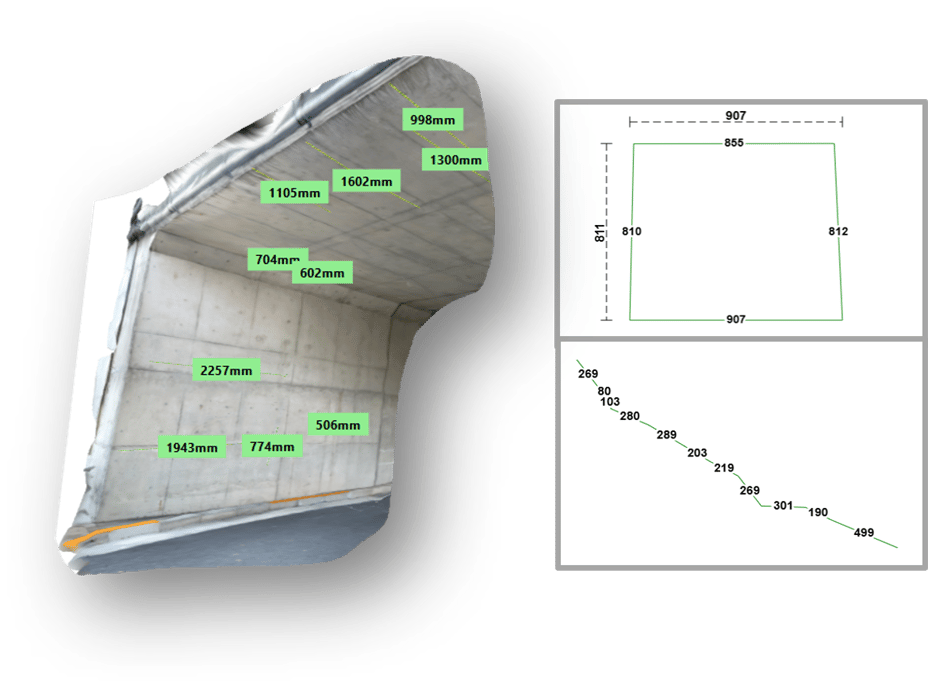
Automated damage layout drawing generation
-
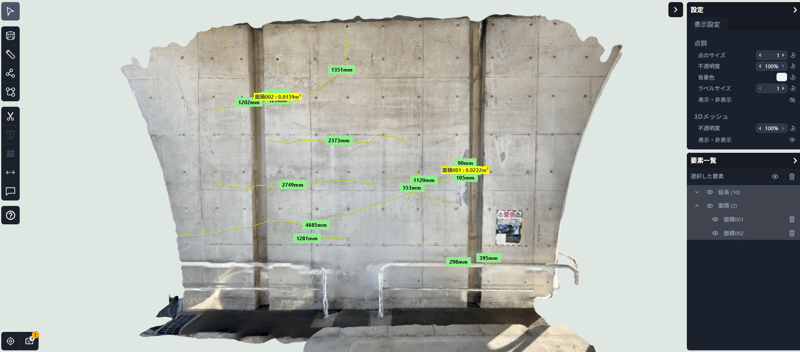
After scanning repair areas to acquire 3D data, users can trace damaged areas directly on the data to create polylines and polygons and output them as 2D drawings.
-
Damage layout drawings (2D CAD drawings) can be automatically generated by marking damaged sections on the 3D data.
-
The calculated areas and crack lengths can be output as 2D CAD data or image files (detail drawings).
-Jun-04-2025-03-41-53-7654-AM.png?width=800&height=531&name=image%20(6)-Jun-04-2025-03-41-53-7654-AM.png)
Damage Assessment Labeling
-
Damage assessment labels can be easily applied to each damaged area using a predefined list.
-
The damage assessment result list is based on a database of the “Standard Types of Targeted Damage” (Table 4.1.1) published in Chapter 2, Inspection and Diagnosis, of the Bridge Periodic Inspection Guidelines issued by the Road Bureau of Japan’s Ministry of Land, Infrastructure, Transport and Tourism (MLIT).

Damage Area Calculation
-
The area of any selected section can be calculated.
-
This function is applicable not only to concrete structures but also to repair areas on steel bridges.